This is the question we get asked most before a protection quote — and the honest answer is that paint protection film (PPF) and ceramic coating solve two different problems. Understanding the difference makes the decision a lot easier.
What PPF Actually Does
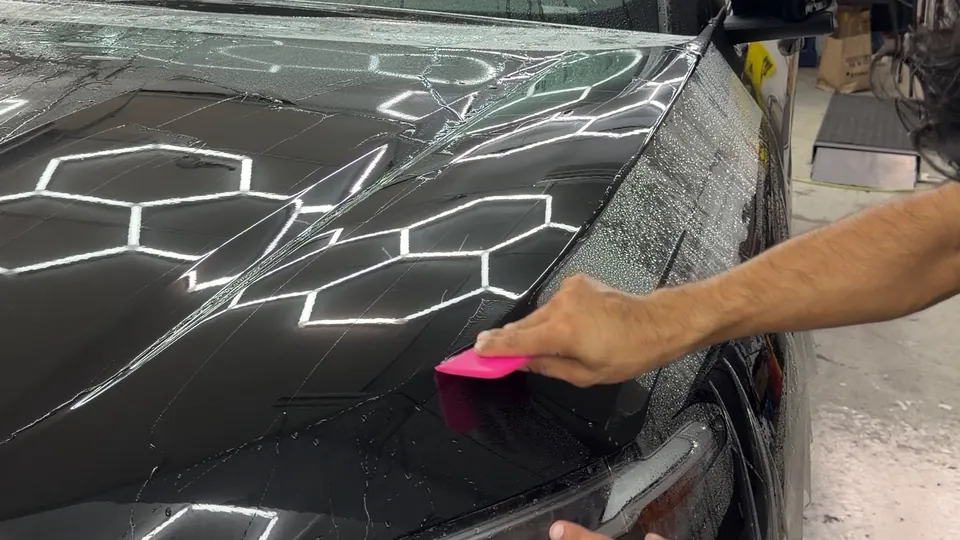
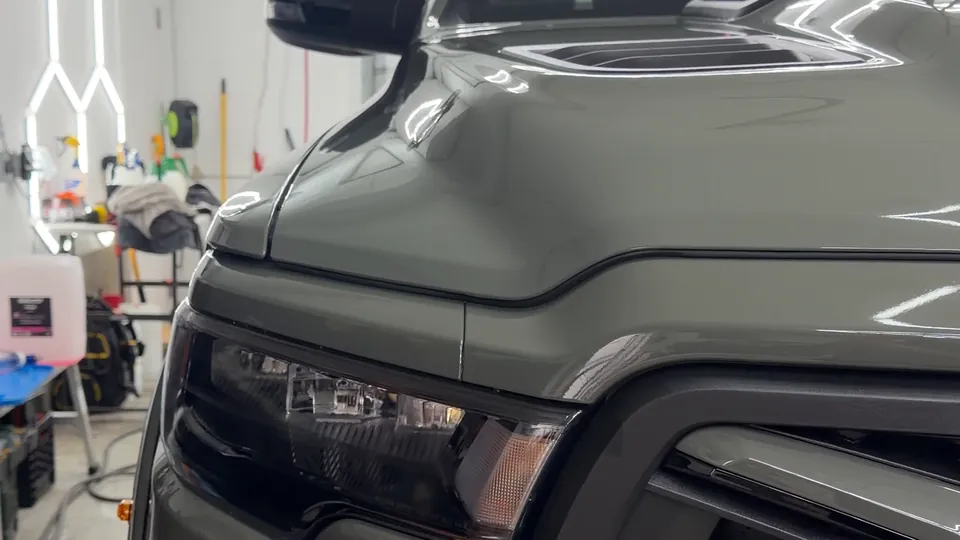
PPF is a thick, clear polyurethane film applied directly to painted panels. It's a physical barrier — it absorbs the impact of rock chips, road debris, and minor scuffs before they ever reach your clear coat. Think of it as armor for the panels that take the most abuse: front bumper, hood, mirrors, and headlights on a daily driver.
What PPF doesn't do on its own: add significant gloss, or make washing dramatically easier. Modern film is hydrophobic to a degree, but that's a side benefit, not its main job.
What Ceramic Coating Actually Does
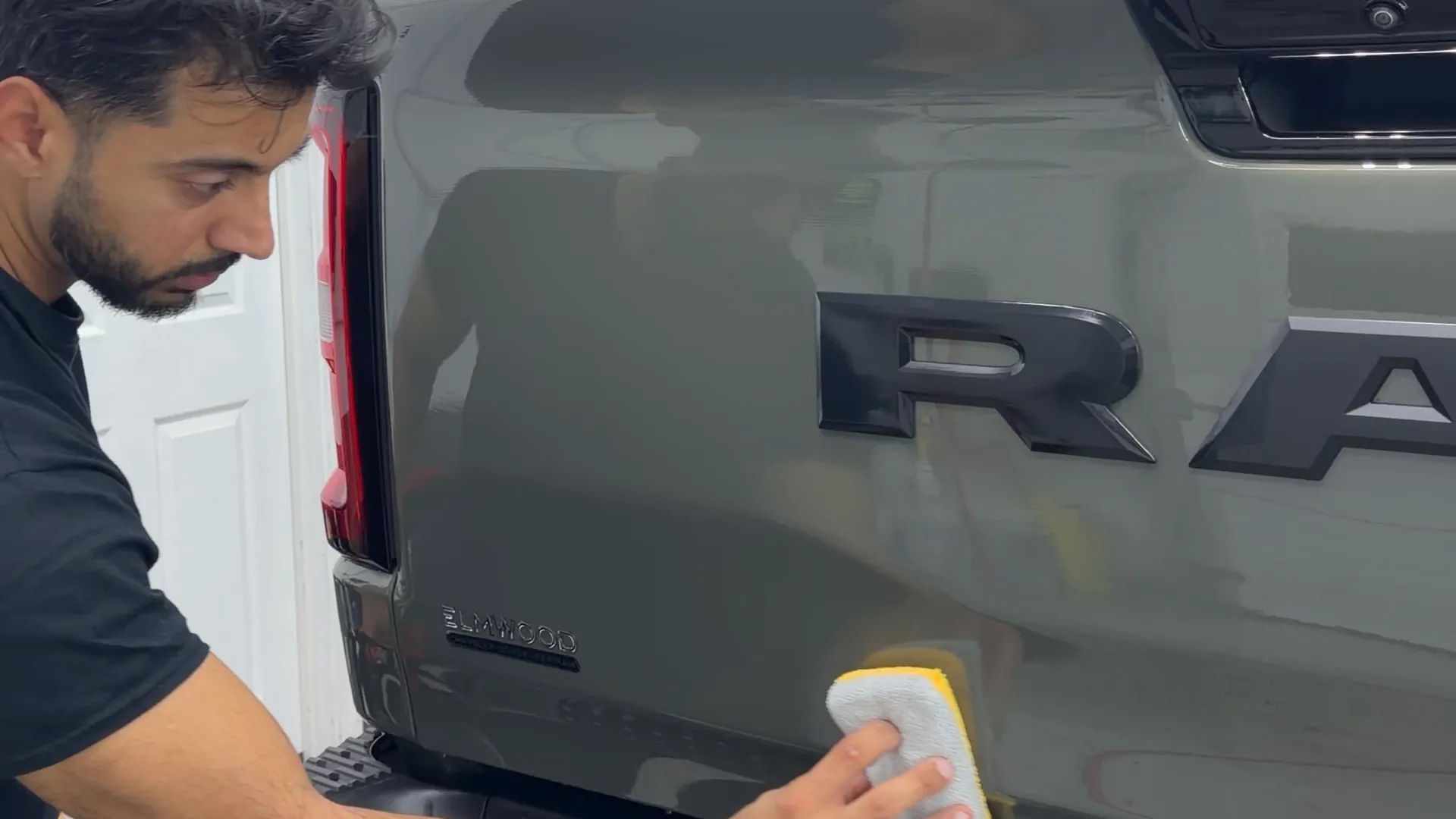
Ceramic coating is a liquid polymer that chemically bonds to your paint, curing into a hard, glossy, hydrophobic layer. It's a chemical barrier against UV damage, oxidation, bird droppings, tree sap, and other contaminants — and it makes water bead and roll off, so dirt has less to grip onto between washes.
What ceramic coating doesn't do: prevent rock chips or scratches. It's not a thick enough layer to absorb a physical impact the way PPF can.
PPF vs. Ceramic Coating at a Glance
| Concern | PPF | Ceramic Coating |
|---|---|---|
| Rock chips & road debris | Yes — its main purpose | No meaningful protection |
| Gloss & hydrophobic finish | Modest | Yes — its main purpose |
| UV & oxidation resistance | Some | Yes |
| Easier washing | Slightly | Significantly |
| Typical coverage | High-impact areas or full vehicle | Full vehicle (plus wheels/trim optionally) |
So Which One Do You Need?
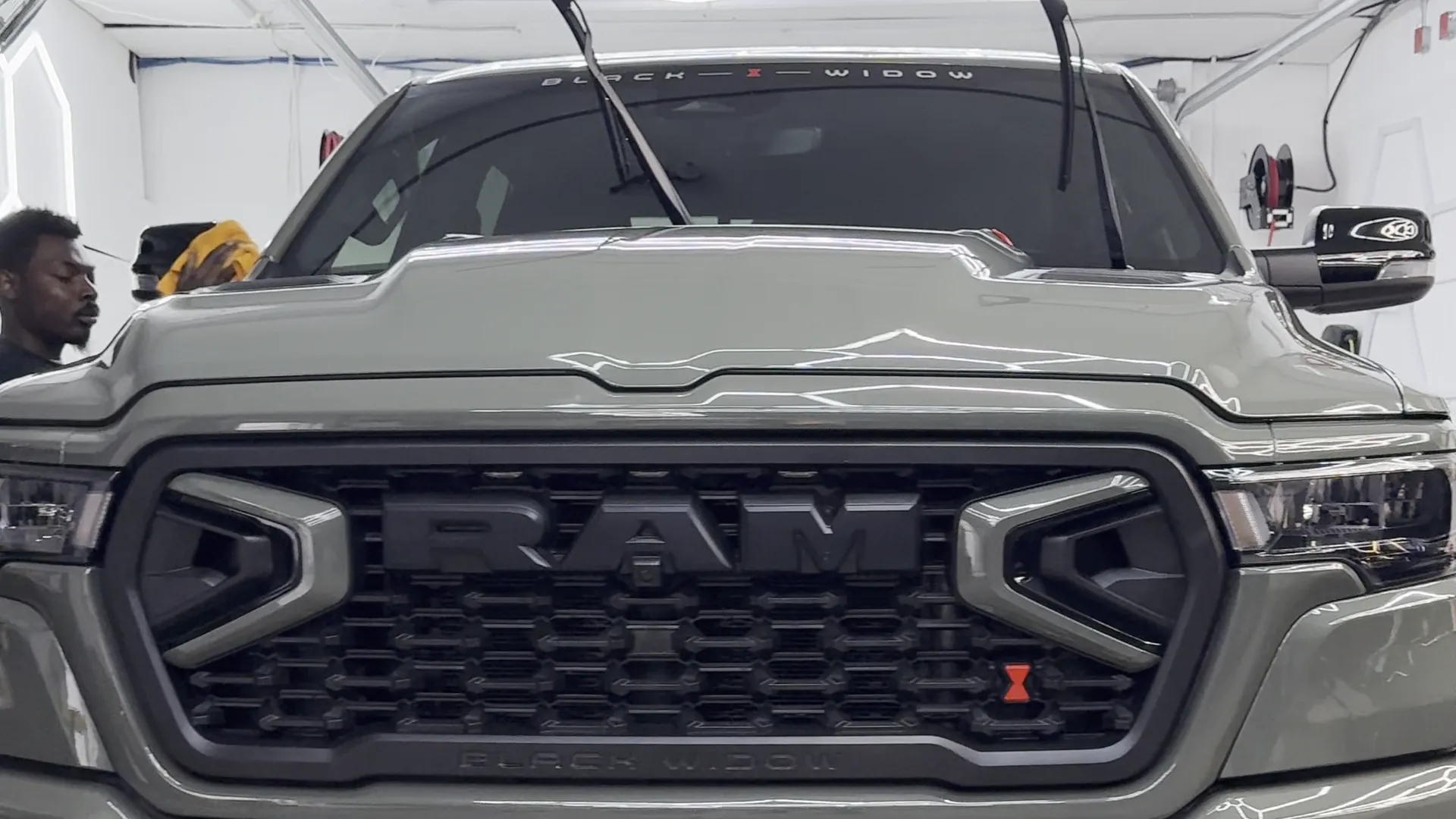
If you're protecting a daily driver from New England road conditions — or a new vehicle before its first mile — PPF on the high-impact areas is usually the higher priority. If your main goal is a deeper shine and easier maintenance on a car that's already in good shape, ceramic coating is often the better first step.
Many owners end up with both: PPF on the front end for impact protection, ceramic coating over the rest of the vehicle (and often over the film itself) for gloss and easier upkeep. There's no wrong order — it comes down to your budget and what worries you most about your paint.
We'll walk through your specific vehicle, driving conditions, and goals when you request a quote, and recommend coverage that actually makes sense — not just the most expensive option.